

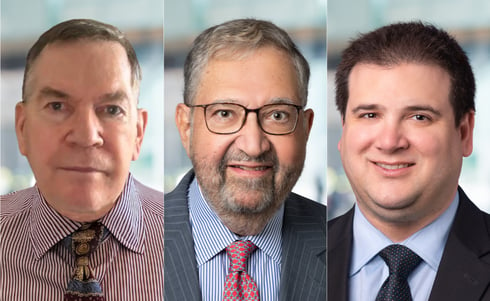
Warren J. “Skip” Kessler is a seasoned tax and real estate attorney whose career has been defined by his ability to structure complex transactions with precision, creativity, and a deep understanding of both the legal and practical business issues. Whether working with partnerships, limited liability companies, or corporations, Skip’s focus remains on achieving tax-efficient solutions tailored to his clients’ strategic goals.
Skip is widely acknowledged for his expertise with Internal Revenue Code Section 1031 like-kind exchanges. Over decades of practice, he has structured thousands of forward, reverse, and other sophisticated 1031 exchange transactions involving substantial property values, helping owners and investors navigate complex tax-deferral strategies and achieve tax efficient outcomes. Skip regularly speaks on cutting-edge 1031 topics at high-level national seminars and is first on the experienced real estate professionals’ short lists as a go-to resource for both routine and highly complex exchange situations.
His capabilities extend to structuring dispositions where exchange objectives vary among partners or members, crafting solutions that allow some parties to exchange while others liquidate, and addressing challenging California property tax issues.
Outside of the Section 1031 exchange area Skip has devised and implemented numerous structures to separate family members or partners who own their common interests in partnerships, limited liability companies, and corporations. In his words, “I spend some part of every day separating family members or partners with tax efficient structures.”
Skip also advises on Qualified Opportunity Zone investments, represents clients before the Internal Revenue Service, United States Tax Court, and state tax authorities, and provides counsel across a full range of tax, real estate, partnership, and corporate matters.
Clients include owners of large real estate portfolios, family offices, private businesses, and high-net-worth individuals who own their real estate in partnerships, limited liability companies, and corporations. Skip’s ability to translate complex Internal Revenue Code provisions into clear, practical guidance and successful outcomes is a hallmark of his client service approach.
He has been recognized on the Southern California Super Lawyers list almost from the list’s inception and he has been listed in The Best Lawyers in America® each year since 2013, reflecting his longstanding professional reputation.
Skip received his A.B. degree in Government from Cornell University, where he served as an officer of his class, and earned his J.D. degree, cum laude, from the University of Michigan Law School. He is actively involved in numerous charitable and pro bono activities. Skip is a former chair and director of the California Housing Partnership Corporation. He previously served as General Counsel to Wilshire Boulevard Temple and as a trustee of the Temple. Skip is a member of an ad hoc committee of the Jewish Federation of Los Angeles dealing with real estate issues. He is a member of Hillcrest Country Club and serves on the finance, audit, and legal committees.
He is also a founding Director of Genesis Bank with offices in Newport Beach and Beverly Hills, California. Genesis Bank is one of approximately 140 FDIC-chartered banks designated as a Minority Depository Institution and one of only two that are minority-controlled. The Bank’s mission includes providing loans and other banking services to underserved businesses in Orange, Los Angeles, San Bernardino, and Riverside counties, as well as offering financial literacy training to its constituents. Skip serves as Vice Chair of the Bank and is a member of the Bank’s Audit and Risk, Directors Loan Committee, and Compensation and Governance Committees and chairs the Compensation and Governance Committee.
When Skip is not advising clients, or working on his charitable and pro bono matters, or attending to bank responsibilities, he enjoys national and international travel with his wife Joan and spending time with his six grandchildren, his sons and daughters-in-laws. He collects Bordeaux wine, is an amateur photographer, and maintains a classic car, which he supports and occasionally drives.
Publications
Client Alert
The Tax Joys of Opportunity Zones
July 11, 2025
Client Alert
IRS Extends Deadline for 1031 Exchanges Affected by the 2025 Southern California Wildfires: Key Points You Need to Know
January 16, 2025
As a result of the wildfires and straight-line winds that began in Southern California on January 7, 2025, the IRS issued an extension of the 45- and 180-day deadlines for IRC §1031 exchange transactions. Here are key points and frequently asked questions about the extension. Who is eligible? The extensions apply to (i) taxpayers residing in, or whose principal place of business or books and records are located in, Los Angeles County and (ii) taxpayers who have difficulty meeting the deadlines due to the disaster. The extensions permit eligible persons who began an IRC §1031 exchange between November 23, 2024, and January 7, 2025, to extend the 45-day identification period to October 15, 2025. The extensions permit eligible persons who began an IRC §1031 exchange between July 11, 2024, and January 7, 2025, to extend the 180-day exchange period to the later of October 15, 2025, or 120 days after the original 180-day deadline date. The extensions permit eligible persons who began a reverse exchange in between December 31, 2024, and January 7, 2025, to extend the 5-business day period to enter into a Qualified Exchange Accommodation Agreement (a “QEAA”) to October 15, 2025. A taxpayer may need to extend the time for filing his, her or its 2024 tax return to obtain this benefit. Which transactions are covered? Forward Exchanges. The Relinquished Property was transferred by no later than January 7, 2025. Reverse Exchanges. The Exchange Accommodation Titleholder ("EAT") acquired the Replacement Property or the Relinquished Property, as applicable, by no later than January 7, 2025. Who are eligible taxpayers? The taxpayer must be one of the following: An “Affected Taxpayer.” An “Affected Taxpayer” is: Any individual whose principal residence is located in the Disaster Area; Any business entity or sole proprietorship that has its principal place of business located in the Disaster Area; Any individual who is a relief worker and is assisting with the Disaster Area; or Any individual or business entity whose records are kept in the Disaster Area. Any Person Having “Difficulty” In Meeting Deadlines. A person who has difficulty meeting 45- and 180-day deadlines for one of the following reasons (or for a similar reason):The Relinquished Property or Replacement Property is located in the Disaster Area; The principal place of business of any party to the transaction (for example, a Qualified Intermediary, Exchange Accommodation Titleholder, transferee, settlement attorney, lender, financial institution, or a title insurance company) is located in the Disaster Area; or One of the other reasons listed in Revenue Procedure 2018-58 (including the death of any party to a transaction, failure of a lender to fund the transaction, and refusal of the title insurance company to write a title insurance policy). What are the new deadlines? An Affected Person or a Person Having Difficulty in Meeting Deadlines is entitled to an extension of the 45-day identification deadline, the 180-day exchange deadline and, if applicable, the 5-business day deadline for entering into a QEAA, as follows:Any deadline that falls on or after January 7, 2025, may be extended to the LATER of:October 15, 2025, or 120 days after the date on which the deadline would have otherwise occurred. However, in no case may this deadline be extended beyond (a) the due date (including extensions) of the taxpayer’s 2024 tax return (if the Relinquished Property was transferred or the EAT acquired the Replacement Property in 2024) or 2025 tax return (if the Relinquished Property was transferred or the EAT acquired the Replacement Property in 2025) or (b) 1 year. What if the Relinquished Property was transferred or the EAT acquired the Replacement Property after January 7, 2025? If a Relinquished Property was sold, or a Replacement Property was acquired, after January 7, 2025, and the original 45-day identification deadline falls on or before October 14, 2025, the 45-day identification deadline is extended to October 15, 2025. Similarly, if the original 180-day exchange deadline falls on or before October 14, 2025, the 180-day exchange deadline is extended to October 15, 2025. Finally, in the case of a reverse exchange, the original 5-business day deadline to enter into a QEAA falls on or before October 14, 2025, the deadline is extended to October 15, 2025. This extension is only available to Affected Persons. It is not available to Persons Having Difficulty in Meeting Deadlines. How might all of this work? Here are some examples. Example 1. If a Relinquished Property is transferred in a forward exchange on August 1, 2024, then the transaction will have the following deadlines: Identification of Relinquished Property. Without the extension, the 45-day deadline to identify the Replacement Property would be September 15, 2024. This deadline is not affected by the extension, because it does not occur on or after January 7, 2025. Receipt of Replacement Property. Without the extension, the 180-day deadline for the taxpayer to receive the Replacement Property would be January 28, 2025. With the extension, the new deadline is October 15, 2025. The taxpayer may be required to extend his, her or its 2024 tax return to obtain this benefit. Example 2. If a Relinquished Property is transferred in a forward exchange on December 27, 2024, then the transaction will have the following deadlines:Identification of Replacement Property. Without the extension, the 45-day deadline to identify the Replacement Property would be February 10, 2025. With the extension, the new deadline is October 15, 2025. (Note that if a taxpayer wants to change his, her or its 45-day identification, he, she or it will need to revoke the prior identification prior to submitting a new identification.) Acquisition of Replacement Property. Without the extension, the 180-day deadline to acquire the Replacement Property would be June 25, 2025. If the taxpayer is able to utilize the full 120-day extension, the new deadline is October 23, 2025. However, if the due date (including extensions) of the taxpayer’s 2024 tax return is earlier than October 23, 2025, then the taxpayer’s deadline to acquire Replacement Property will be the extended due date of the taxpayer’s 2024 tax return. Example 3. If a Relinquished Property is transferred in a forward exchange on January 6, 2025, then the transaction will have the following deadlines:Identification of Replacement Property. Without the extension, the 45-day deadline to identify the Replacement Property would be February 20, 2025. With the extension, the new deadline is the latter of (i) June 20, 2025 (120 days after February 21, 2025), and (ii) October 15, 2025. Acquisition of Replacement Property. Without the extension, the 180-day deadline to acquire the Replacement Property would be July 5, 2025. With the extension, the extended identification deadline is the latter of (i) October 15, 2025, and (ii) November 2, 2025 (120 days after July 5, 2025). The taxpayer has until November 2, 2025, to complete its exchange. The taxpayer does not need to extend its 2025 tax return to take advantage of this extension. What does the State of California say? The California Franchise Tax Board conforms to the foregoing extensions. Although this article covers the basics, there are additional nuances in qualifying for and satisfying the requirements of IRC §1031. For additional information or questions concerning the information covered in this article or any other issues related to IRC §1031, please contact any member of the Greenberg Glusker LLP Tax Group.
News
Events
Partnership
Bisnow Los Angeles CRE State of the Market Conference
October 14, 20268:00 AM – 4:00 PM PT
Sherman Oaks, California
James Han, Sheri L. Bonstelle, Craig S. Coan, Warren J. "Skip" Kessler, and Steven R. Mach
Speaking Engagement
Advanced Taxation of Section 1031 Exchanges | Los Angeles County Bar Association
September 9, 202612:00 PM – 1:30 PM PT
Online
Warren J. "Skip" Kessler
